Is Mostbet legal and safe in India
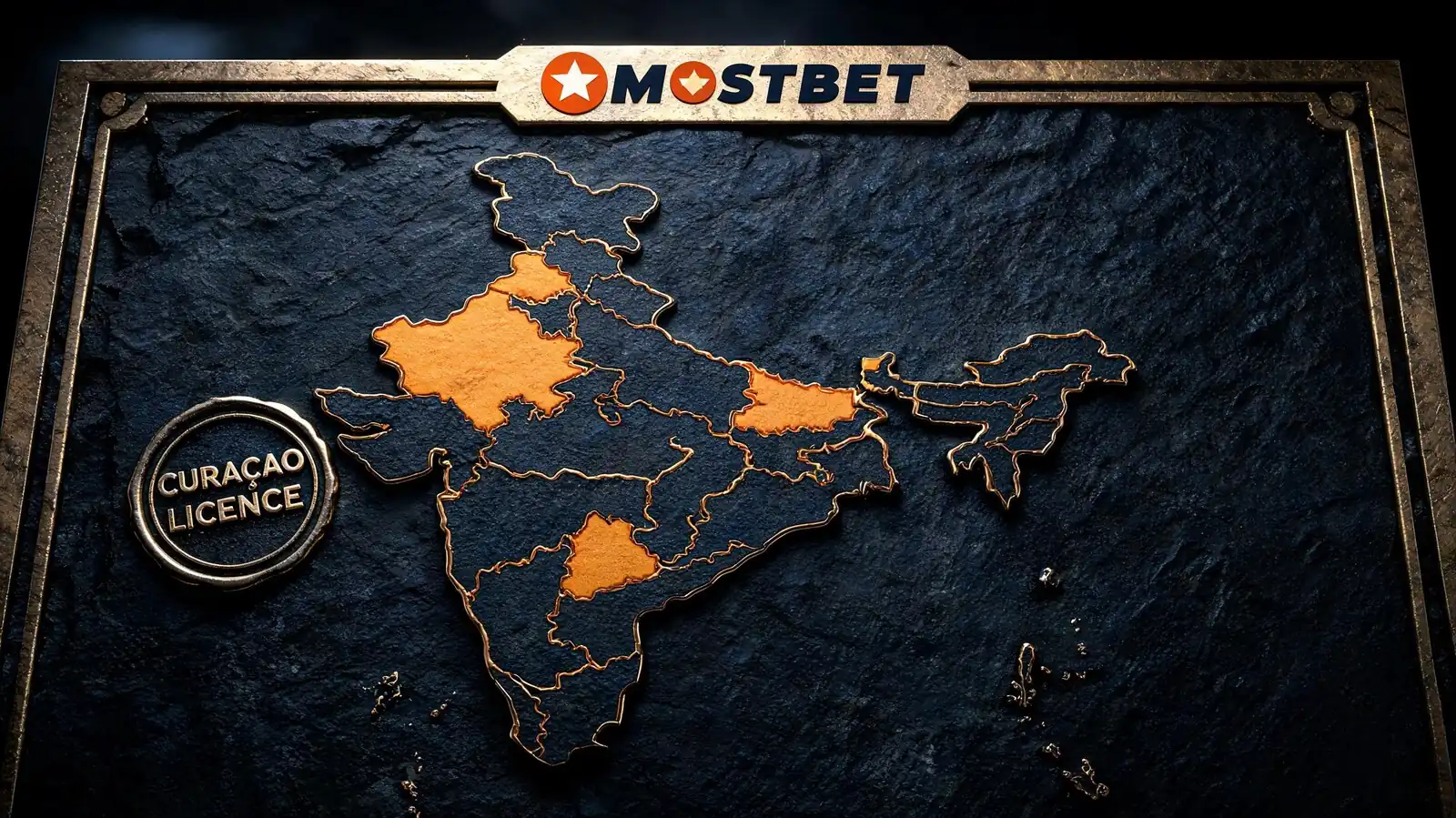
India's betting law landscape
India has no single national ban on online betting. An old central gambling law predates the internet, so the practical rules are set by individual states, leaving offshore sites like Mostbet in a grey area rather than clearly legal or clearly criminal.
To understand where Mostbet stands, start with how Indian betting law is actually structured, because it is not one rule but many.
- Central law vs state rules: the long-standing central gambling statute dates from well before online betting existed and is widely read as not squarely covering offshore internet wagering. Gambling is largely a state subject, so each state can make its own rules, which is why there is no one national answer.
- Offshore operators explained: Mostbet is based outside India and accepts Indian players from abroad under a foreign licence. It is not licensed or regulated by any Indian authority, so it operates in the space between foreign legality and Indian state law.
- Where the grey area sits: for most residents, using an offshore site is neither explicitly permitted nor clearly prosecuted, the law focuses far more on operators than individual punters. That ambiguity is the grey area, and it is real, not a marketing line.
Part of the confusion comes from a distinction Indian courts have long drawn between games of skill and games of pure chance. Skill-predominant activities have historically enjoyed more protection than pure gambling, and operators frequently lean on that framing. Sports betting and casino play sit in contested territory within that debate, and the boundaries have been tested repeatedly in litigation. For an ordinary player the practical upshot is simple: the categories are unsettled enough that no one can hand you a clean yes-or-no, which is precisely what 'grey area' means.
It also matters that the law here is aimed largely at supply, not demand. Statutes and enforcement in this space have concentrated on running, advertising and bankrolling betting operations, and on the payment channels that feed them, far more than on the individual placing a bet. That focus is why offshore sites can reach Indian users at all, and why the personal legal position is ambiguous rather than plainly criminal. It does not mean play is endorsed; it means the framework was not built with the individual offshore bettor as its primary target.
There is no single national ban, India's betting law is set state by state, which leaves offshore sites like Mostbet in a genuine grey area.
State-by-state framing
Because states set their own rules, your location matters most. Some states have moved to restrict or prohibit online betting; others have no specific law, and enforcement against individual players is uneven across the country.
The single most important factor for any Indian player is which state they are in, because the answer really differs across the map.
- States with stricter rules: a handful of states have passed laws that restrict or prohibit online betting and gaming, and a few specifically target online money games. If you are in one of these, the position is clearer and less favourable.
- How enforcement varies: even where rules exist, enforcement has historically focused on operators, advertising and payment channels far more than on individual bettors. That does not make play legal, it means the risk profile differs by state and over time.
- What it means for players: you are responsible for knowing and following your own state's rules. The same activity can be treated differently in two neighbouring states, so do not assume a friend's experience elsewhere applies to you.
State laws in this area have been changing in recent years, and some have faced court challenges. Treat the landscape as a moving one and re-check your state's current position rather than relying on older information.
The practical reason state borders matter so much is that a single national service reaches users who each live under different rules. Two friends using the same site from neighbouring states can be in really different legal positions, and a rule that was settled last year may have been amended, struck down or replaced since. This is also why blanket claims you will see online, that betting is simply 'legal' or simply 'banned' in India, are both wrong; neither captures a system where the answer is set locally and keeps moving.
Because the picture shifts, the responsible approach is to verify rather than assume. Look up your own state's current law on online betting and money gaming, note that some states specifically target online formats while others address only physical gambling houses, and recognise that the absence of a specific law is not the same as positive permission. If your state has moved to restrict online betting, take that seriously; if it has not, you are still operating in ambiguity rather than clear approval. When in doubt about your personal exposure, a qualified local professional is the right source, not a betting guide.
Your state decides your risk, some restrict online betting, others have no specific law, so check your own state's current rules first.
Mostbet's licence and operator
Mostbet is run by an offshore operator under a Curaçao licence. That is a real gaming licence, but a light-touch international one, it is not an Indian licence and carries no oversight from any Indian regulator.
Knowing who stands behind the brand, and what its licence does and does not cover, is central to judging safety.
- Who runs the brand: Mostbet is a long-running international betting and casino brand, active since 2009, operated from offshore. We do not assert a specific operating-company name as verified fact, the key point is that it is a foreign operator, not an Indian one.
- The licence it holds: it operates under a Curaçao gaming licence, a common framework for international online operators. It is genuine, but it is a lighter regulatory regime than tier-one jurisdictions, and we do not quote a specific licence number as verified.
- What that licence covers: a Curaçao licence sets baseline operating conditions and gives the brand a regulatory home, but it offers Indian players far less recourse than a domestic regulator would. If a dispute arises, you are dealing with an offshore framework, not an Indian one.
It is worth being concrete about what 'lighter regime' means in practice, without overstating it. A Curaçao licence requires an operator to hold a recognised authorisation and meet baseline conditions, so it is meaningfully different from an unlicensed site with no oversight at all. But it does not put an Indian authority between you and the operator, set Indian-specific consumer rules, or give you a domestic body to appeal to if a dispute goes badly. The protection it offers is real but thin compared with a tier-one regulator, and it is foreign, so any escalation beyond the operator is slow and remote for an Indian player.
This is also why we are careful not to overclaim the corporate detail. Brands in this sector are often operated through a group of companies across several jurisdictions, and specific operating-company names and licence numbers are exactly the kind of detail that is easy to state wrongly or that changes over time. The honest, verifiable position is the one that matters to your decision: an established international brand, running since 2009, reaching Indian players from offshore under a Curaçao framework, with no Indian licence in the picture. Anyone presenting a precise licence number as proof of safety is offering false reassurance.
Mostbet holds a genuine offshore Curaçao licence, not an Indian one, so oversight and recourse sit outside India's regulators.
Player safety and protections
Practical safety comes from the brand's own standards rather than Indian regulation: payment security, audited game fairness and internal dispute routes. They are meaningful, but you carry more of the responsibility than on a domestically licensed site.
With no Indian regulator in the loop, the protections that matter are the ones the operator builds in, and the habits you bring.
- Data and payment security: the site uses standard encryption for accounts and payments, and Indian players fund through familiar regulated rails like UPI and NetBanking, which adds a layer of bank-side protection on the money itself.
- Fairness and game audits: casino and crash games such as Aviator use provably fair or independently tested random number generation, so outcomes are not arbitrarily set against you. That is fairness in the statistical sense, the built-in house edge still applies.
- Dispute and complaint routes: your first route is the operator's own support and escalation channels; the licensing body is a distant backstop. Realistic expectations matter, see what players report in reviews and complaints.
It is worth being honest about the limits of these protections rather than overselling them. Encryption secures your data in transit but cannot help if you hand your login to a stranger; audited fairness keeps the games statistically honest but does nothing about the built-in house edge; and an internal disputes process is only as good as the staff handling it on a given day. The protections are genuine and meaningful, but they are the operator's own machinery, not an independent Indian authority standing behind you, and judging them on that basis keeps your expectations realistic.
There is an important nuance on the payment side that works in an Indian player's favour. Because deposits and withdrawals run over regulated domestic rails like UPI and NetBanking, the money movement itself carries bank-level security and a traceable record, even though the betting operator sits offshore. That is not the same as the operator being regulated in India, but it does mean your funds are not flowing through some opaque channel, and that a clean, in-your-own-name money trail is one of the strongest practical protections you can give yourself.
The flip side is that the biggest safety risks are usually self-inflicted or impostor-driven rather than the operator cheating you. Fake mirror sites and phishing clones that copy the brand are a real hazard, which is why reaching the genuine site through your own account and the official app matters; our official site and working link guide covers how to recognise the real address. Sharing login details, depositing through a third-party agent, or chasing an unofficial 'bonus link' undoes every built-in protection at once. Within the operator's own world, the realistic safeguards are good account hygiene and the dispute and limit tools, not an external regulator riding to the rescue.
Protect yourself by completing KYC properly, keeping accounts and payment methods in your own name, and using deposit and loss limits from the start.
Real protections exist, encryption, audited fairness, internal disputes, but without an Indian regulator you carry more responsibility for your own safety.
Weighing the risks
On balance, an established offshore brand offers reasonable reliability, but the grey legal status, limited Indian recourse and possible tax obligations are genuine downsides. Weigh both sides and decide as an informed adult, not on hype.
A fair verdict holds the positives and the negatives together rather than landing on either extreme.
- Pros of an established brand: Mostbet has operated since 2009, supports ₹ accounts and Indian payment rails, and runs audited games, that track record counts for something compared with fly-by-night sites.
- Cons and uncertainties: the legal position is a state-dependent grey area; recourse is offshore and limited; access can be disrupted; and winnings may carry Indian tax obligations, such as tax deducted at source on net winnings under current rules. We do not quote exact tax rates as settled fact, and you should treat this as one more reason to keep good records.
- Playing responsibly and informed: if you do play, check your state's rules, keep records for tax, and consult a qualified tax or legal adviser about your own position rather than relying on a betting page.
It helps to separate two questions people tend to blur together: is the brand reliable, and is the activity right for you under your own state's law and finances. Mostbet can score reasonably on the first, an established operator with audited games and working Indian payments, while the second remains entirely personal. A trustworthy operator in a grey legal environment is still a grey-area decision; the quality of the brand does not resolve the legal or tax questions, it only removes the 'obvious scam' end of the risk spectrum.
On tax specifically, the cautious approach is to assume winnings may be reportable and to keep your own records, rather than to rely on any single figure you read online. Indian rules on taxing online winnings have changed in recent years and can involve tax deducted at source on net winnings, but the exact treatment of your situation is not something a betting page should pin down for you. Treat that as a prompt to consult a qualified tax adviser, and to hold on to your deposit and withdrawal history so any liability is straightforward to calculate.
For most readers the realistic outcome of weighing all this is not a clean yes or no but a clearer-eyed decision. You will know that the brand is established rather than a fly-by-night operation, that the legal position depends on your own state and is really uncertain, that recourse if something goes wrong is limited and offshore, and that any winnings may carry tax you should plan for. That is a more honest basis for a choice than either the hype of a sign-up page or the panic of a one-star review, and it puts the responsibility where it belongs, with you.
Whatever you decide, treat betting as paid entertainment, not income. Only stake what you can afford to lose, set deposit and loss limits, and use self-exclusion if it stops being fun. Betting is strictly for adults 18 and over, and support is available if gambling becomes a problem.
An established brand with real reliability, but a grey legal status, offshore recourse and tax obligations, decide as an informed adult and consult a professional.
Frequently asked questions
Is Mostbet legal in India?
It sits in a grey area. There is no single national ban on online betting; the rules are set state by state. Mostbet operates offshore under a Curaçao licence, not an Indian one, so for most residents it is neither clearly legal nor clearly criminal. Check your state and ask a professional.
Can I get in trouble for using Mostbet?
Indian betting law focuses far more on operators, advertising and payments than on individual players, and enforcement varies by state. That does not make play legal. You are responsible for your own state's rules, so confirm them and seek advice for your situation.
Is Mostbet safe to use in India?
It is an established brand since 2009 with encryption, audited games and ₹ support, which is safer than unknown sites. But it is not Indian-regulated, so recourse is limited. Safety also depends on you, complete KYC, keep accounts in your own name, and set limits.
What licence does Mostbet hold?
Mostbet operates under an offshore Curaçao gaming licence, a common framework for international operators. It is a genuine but lighter-touch regime, and it is not an Indian licence. We do not quote a specific licence number as verified fact.
Do I have to pay tax on Mostbet winnings in India?
Winnings from online betting may carry Indian tax obligations, such as tax deducted at source on net winnings under current rules. We do not state exact rates as settled fact, keep records and consult a qualified tax adviser about your own position.